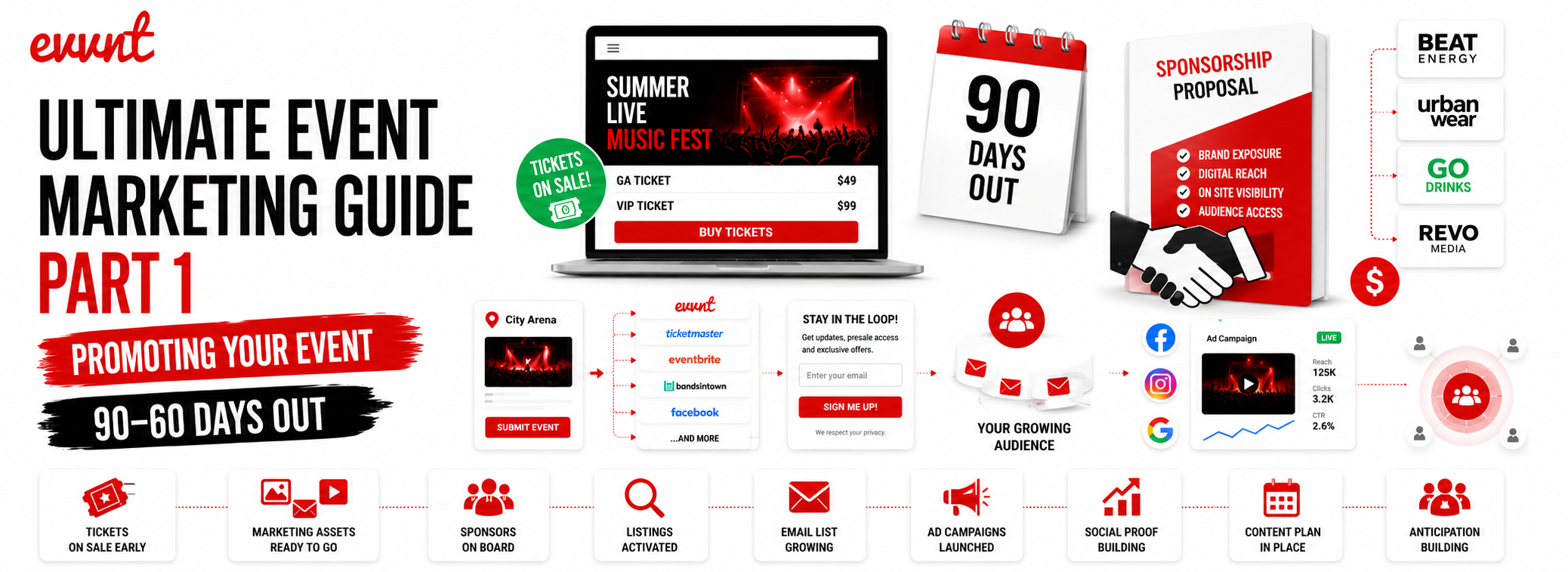
Welcome to our Ultimate Event Promotion Guide part one. This is for event promoters with 90-60 days before their event.
Partners: Grab this quick view, printable full 90 days event promoter checklist to share with your event promoters.
One of the biggest mistakes event promoters make is waiting too long to start marketing.
By the time many events begin running ads or posting consistently on social media, they’ve already lost valuable momentum, audience attention, media opportunities, and early ticket revenue.
Successful events don’t start promoting two weeks before the event.
They start building anticipation months ahead of time.
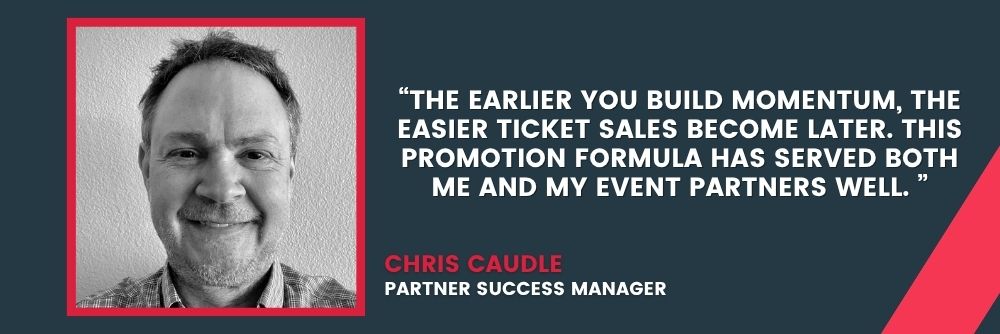
At Evvnt, we’ve worked with thousands of event creators, promoters, venues and festivals. When we need real-world event promotion expertise, we turn to Chris Caudle, a seasoned event promoter with decades of hands-on experience in ticketing, sponsorships, live entertainment and audience growth.
His advice is simple:
The 90–60 day window is where your event foundation is built. This is where you:
- establish visibility
- launch your ticketing
- activate sponsors
- build your audience
- create urgency
- and begin collecting valuable customer data
Let’s break down the most important strategies to focus on during this phase.
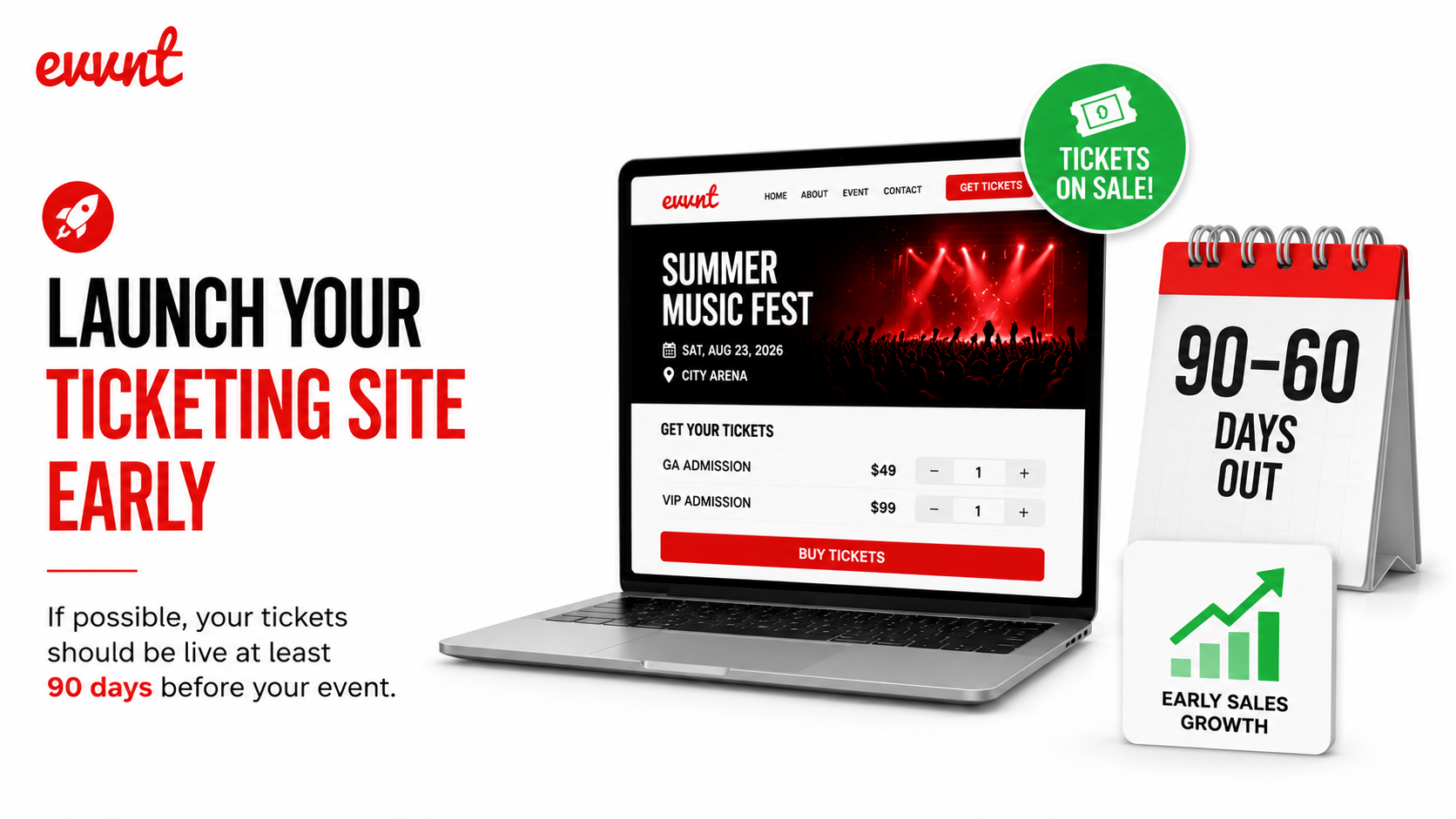
This gives you time to:
- build awareness gradually
- capture early buyers
- retarget interested visitors
- test messaging
- generate social proof
Your ticketing page should include:
- event details
- schedule information
- FAQs
- parking details
- pricing tiers
- sponsor highlights
- refund policies
- strong visuals
- and clear calls-to-action
One of the biggest mistakes promoters make is forcing customers to leave the ticketing page to search for answers elsewhere. Every unanswered question creates friction, and friction kills conversions.
ProTip: Drive all marketing traffic directly to your ticketing URL whenever possible. The fewer clicks between discovery and checkout, the better.
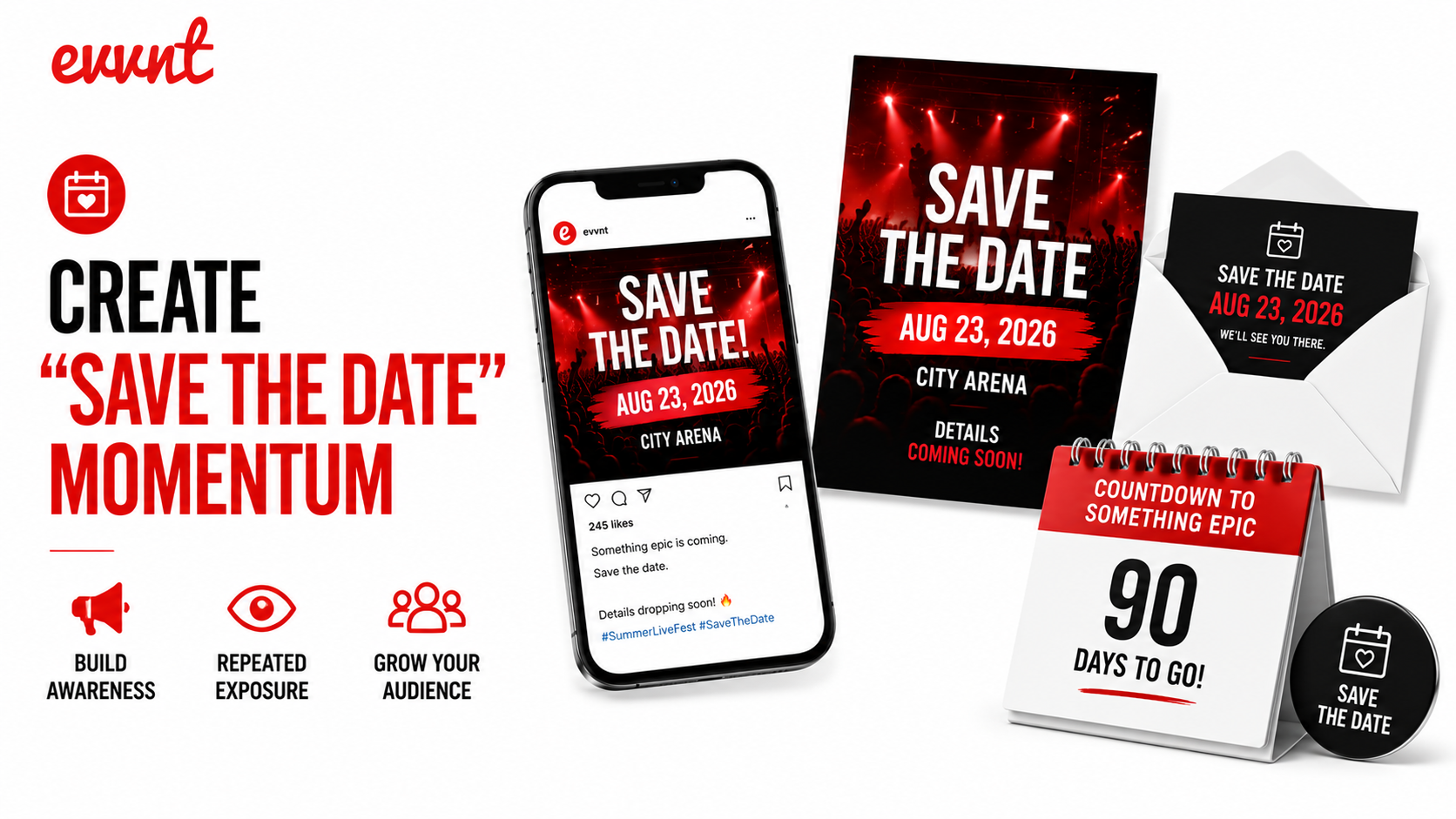
Your audience should start seeing your event consistently across:
- social media
- email campaigns
- posters
- venue screens
- sponsor pages
- local event calendars
- and partner newsletters
People rarely buy tickets the very first time they hear about an event.
Repetition builds familiarity.
Familiarity builds trust.
Trust increases ticket sales.
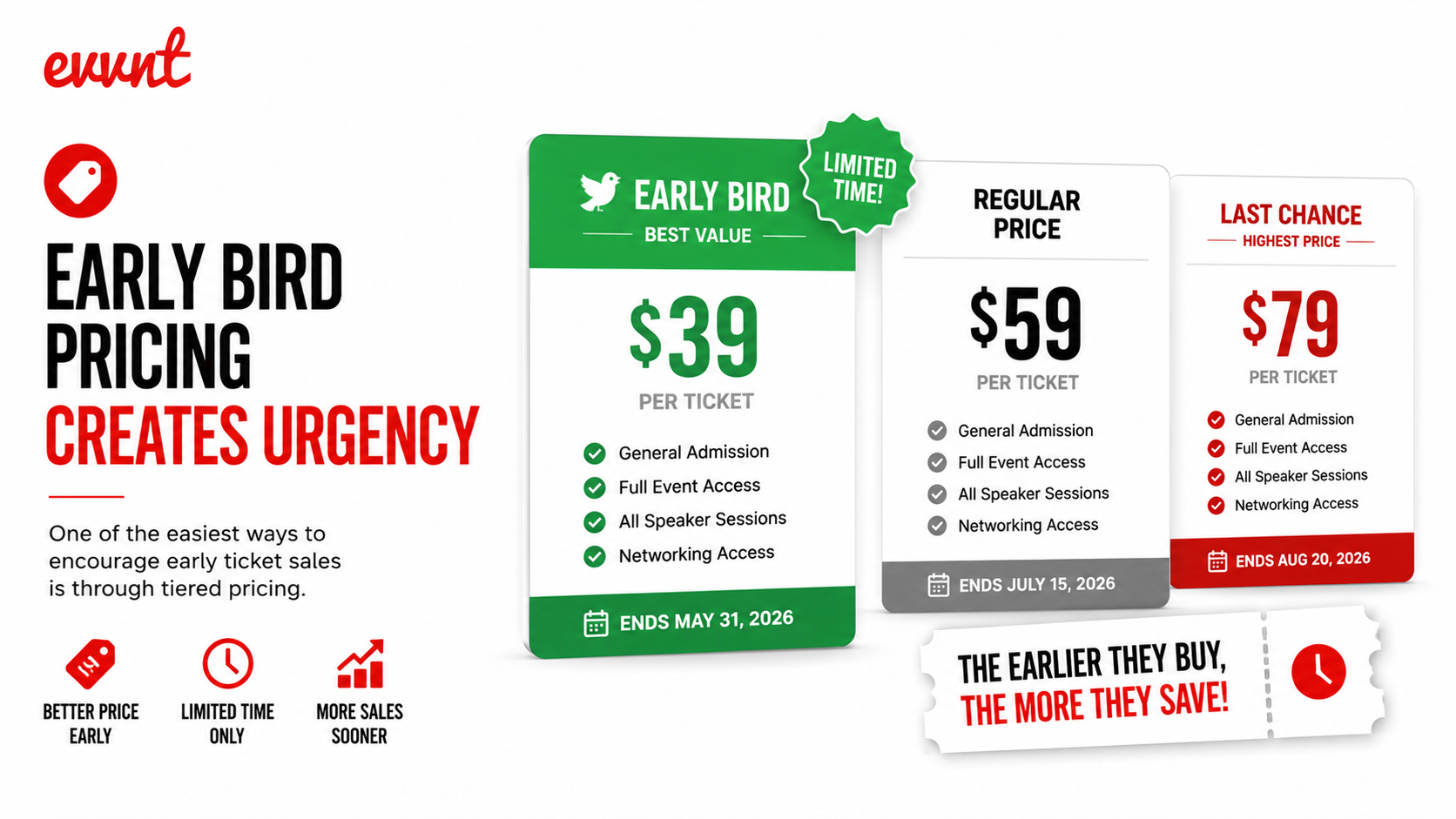
Early Bird pricing works because it gives buyers:
- a financial incentive
- a fear of missing out
- and a reason to purchase now instead of later
Successful promoters often create:
- Early Bird tickets
- General Admission tiers
- VIP upgrades
- Day-of pricing increases
And most importantly: they communicate upcoming price increases frequently.
If your audience knows prices will rise, many buyers will act earlier.
Common Mistake:
- Many events create ticket tiers but never actually promote the urgency behind them. A ticking clock is your best friend when it comes to impulse ticket buys.
- Don’t assume attendees notice pricing changes automatically. If that early bird discount is ending, tell them repeatedly.
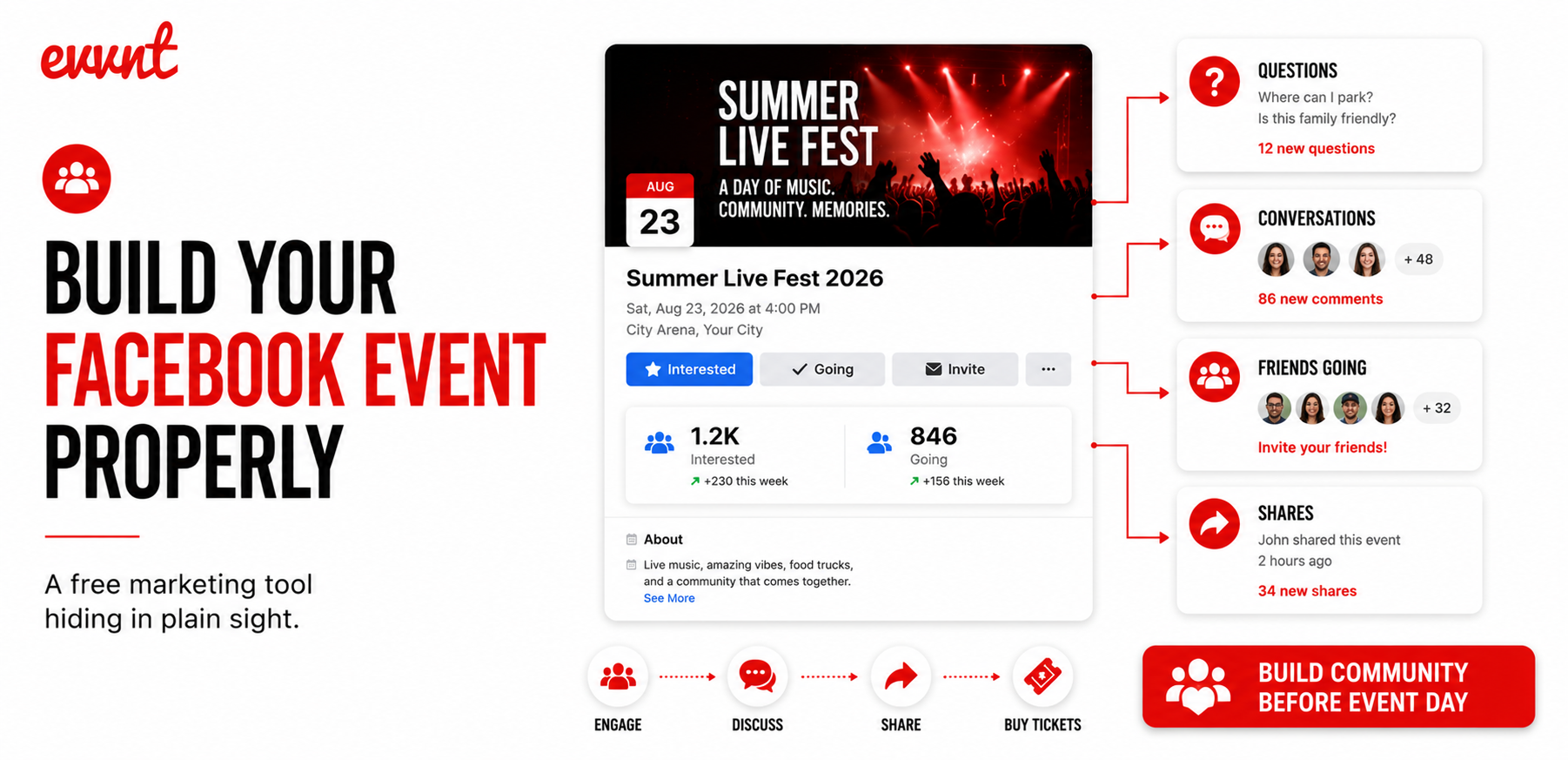
But simply creating the page isn’t enough.
Your Facebook Event should become an active content hub where you:
- post updates regularly
- upload videos
- highlight vendors and sponsors
- answer attendee questions
- create countdowns
- and continuously drive people toward your ticketing page
Adding co-hosts, sponsors, vendors, and performers can dramatically increase exposure through additional audience sharing.
ProTip: Always include your direct ticket link in:
- the event description
- comments
- pinned posts
- and update posts
Never make people search for where to buy tickets.
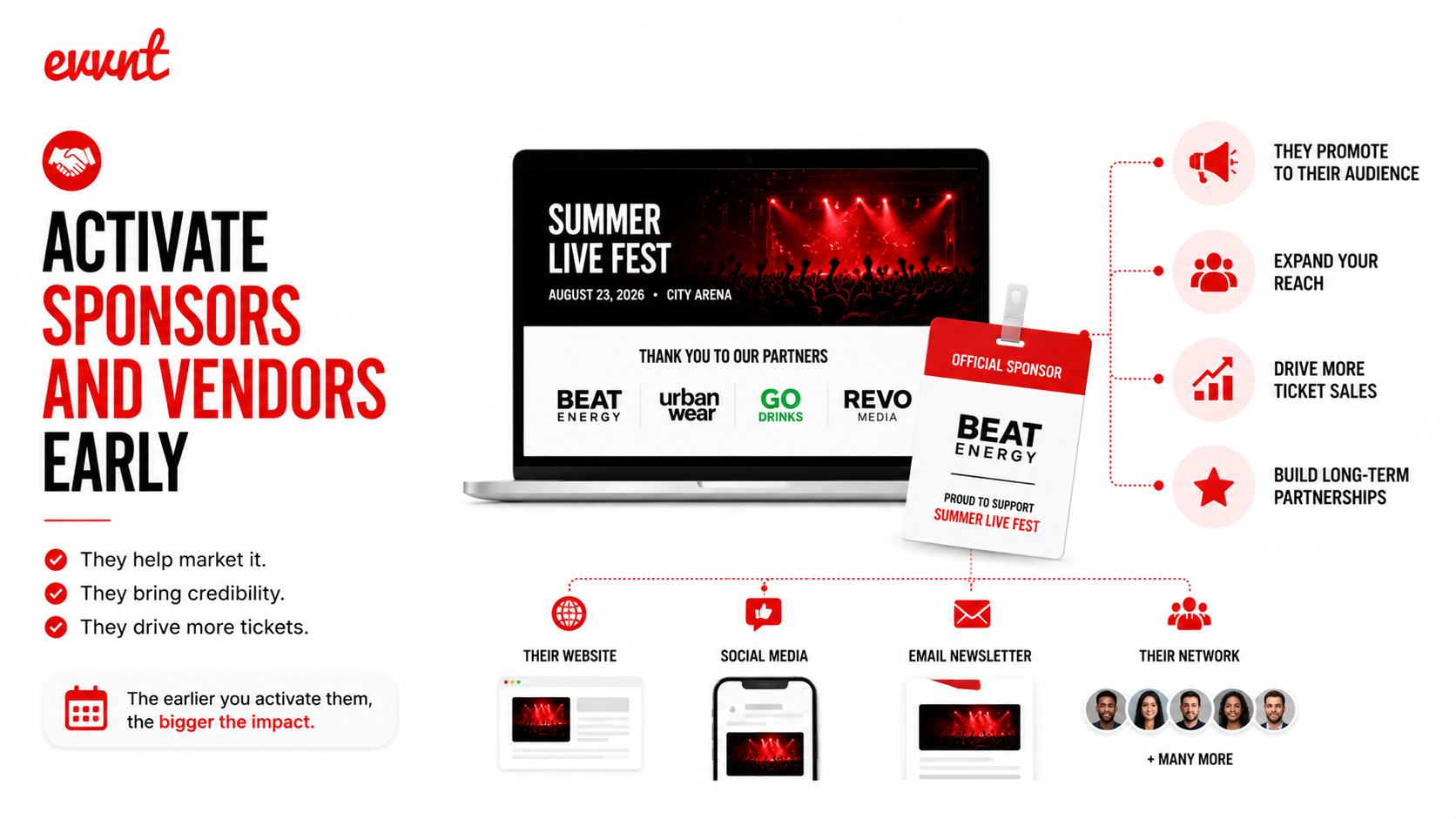
At the 90–60 day stage, begin organizing:
- sponsor contact lists
- promotional timelines
- shared social assets
- email templates
- video reels
- and co-branded graphics
Note sure how to do that? Ask AI for help.
The easier you make promotion for your partners, the more likely they are to participate consistently.
Many successful events create reusable:
- pre-written captions
- Canva templates
- social calendar
- email copy
- story graphics
- and QR code flyers
This removes friction and creates unified event promotion across multiple audiences.
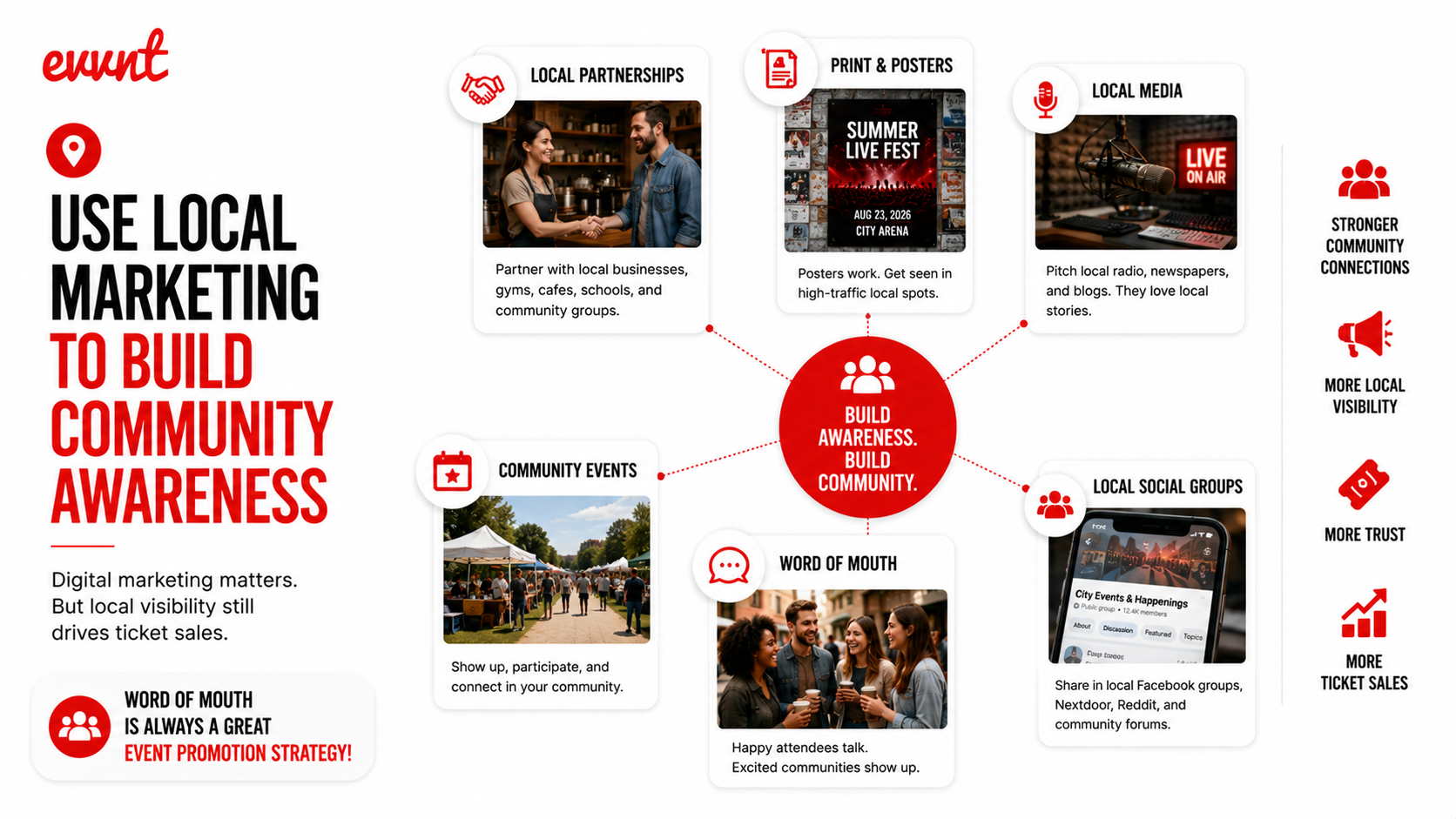
Some of the best-performing local event promotions include:
- coffee shop posters
- brewery flyers
- restaurant partnerships
- community calendars
- local blogs
- radio mentions
- and QR code signage
QR codes are especially powerful because they shorten the customer journey instantly from discovery to purchase.
A customer should be able to:
See → Scan → Buy
Within seconds.
Did you know Evvnt Ticketing can help you create your very own QR code for your event?
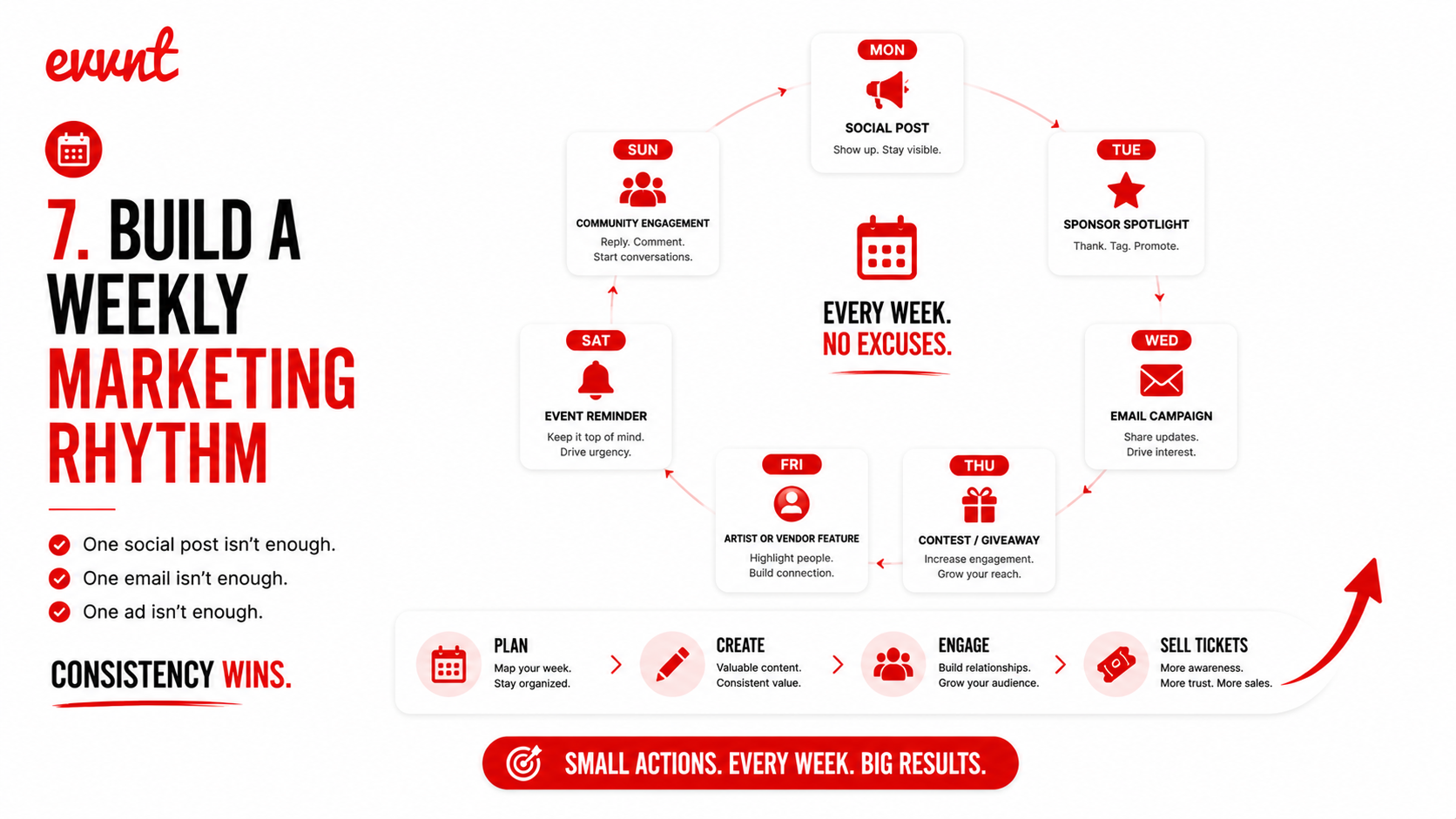
The most successful promoters create weekly marketing rhythms that include:
- social posts
- videos
- countdowns
- partner outreach
- email campaigns
- press outreach
- and retargeting
Momentum compounds over time.
The promoters who stay visible consistently are often the ones who sell the most tickets later.
The 90–60 day phase is about building the engine that drives ticket sales later.
This is where you:
- establish visibility
- create urgency
- activate partnerships
- and begin building trust with potential attendees
The earlier your event builds momentum, the easier the final marketing push becomes.
In Part 2 of this series, we’ll break down how to increase ticket sales during the final 30 days before your event, including flash deal strategies, social media engagement tactics, email marketing and last-minute buyer psychology.